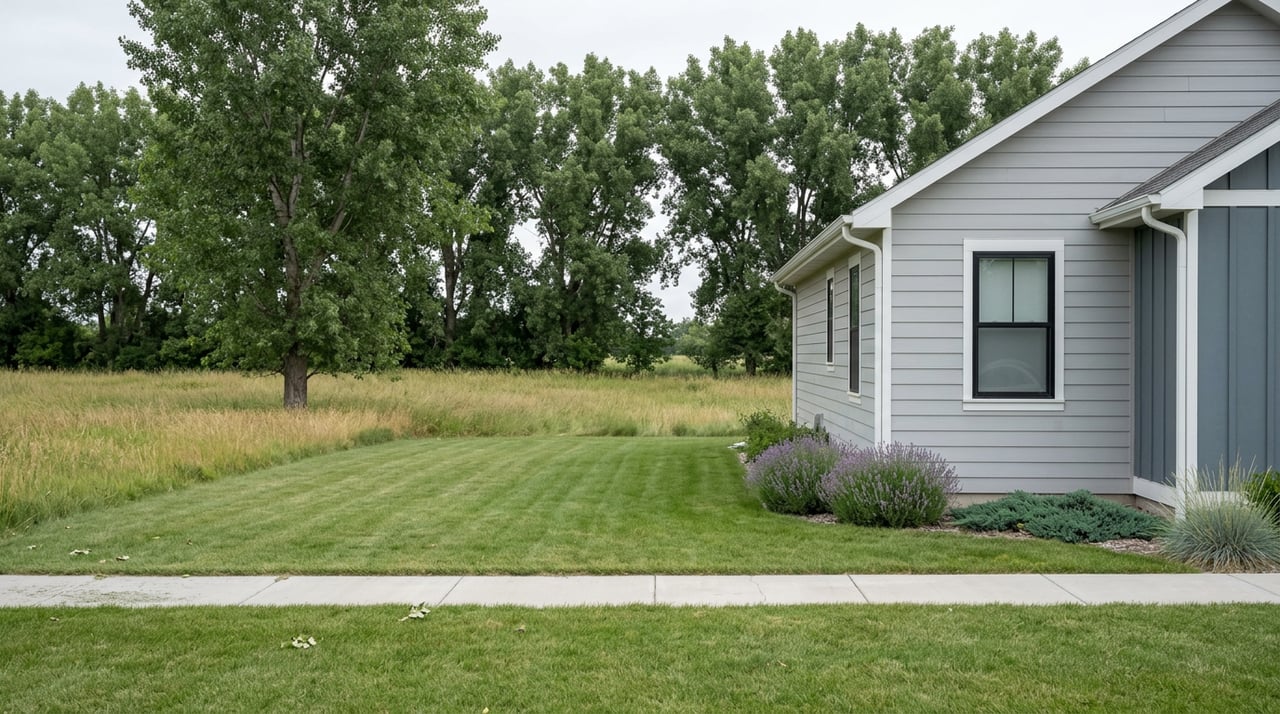
Why Idaho's 2026 Drought Emergency Is Showing Up in Middleton Well-and-Septic Closings
August 27, 2026
August 27, 2026
A buyer under contract on a three-acre parcel outside Middleton this summer expected the usual thirty-day dance: inspection, appraisal, loan conditions, done. Instead, the septic evaluation stretched past three weeks while the excavator waited on a health district site visit, and the seller's agent kept fielding the same question from a nervous buyer: is this normal, or is something wrong with the property?
Nothing was wrong with the property. What had changed was the water year.
Idaho is in the middle of its most severe snowpack shortfall in recorded history, and the emergency drought declaration that followed is doing something few Middleton buyers or sellers have connected to their own closing: it is raising the bar for how much scrutiny a new septic site evaluation gets before a health district signs off. For a town where a meaningful share of homes still run on private well and septic rather than city hookups, that is not a footnote. It is the thing that decides whether escrow closes on schedule or slips into a second extension.
On April 13, 2026, Idaho Department of Water Resources Director Mathew Weaver signed a statewide emergency drought declaration covering all 44 counties, and Governor Brad Little approved it the same day. The order was a response to numbers that had not been seen before. Idaho had just come through its second-warmest snow accumulation season since 1896, with only the winter of 1933-34 warmer, and March 2026 ranked as the second-warmest March on record. A heat dome beginning around March 17 accelerated snowmelt at elevations above 10,000 feet, where snow typically holds for another month. By April 1, snowpack across the state was the lowest ever measured, with 54 snow course locations and 45 SNOTEL sites in the Snake River Basin reporting record-low snow-water equivalent.
The declaration itself runs through December 31, 2026, unless extended or terminated by the director, and it was not written with Middleton homebuyers in mind. Its primary purpose is to let irrigators apply for temporary changes to their water rights. But by June, the picture had not improved. In a June 11 release, the Idaho Surface Water Coalition, which delivers Snake River water to roughly 550,000 acres of southern Idaho farmland, described this as one of "the most challenging water years in generations." Forecasters are now also watching a developing El Niño pattern that could push the winter of 2026-27 toward another dry outcome, with federal forecasters giving it roughly equal odds of arriving as moderate, strong, or very strong.
Septic systems in Idaho are permitted and inspected by seven regional public health districts operating under rules set by the state Department of Environmental Quality. Middleton properties fall under Southwest District Health, the office an excavator or homeowner works with when applying for a new system or confirming the location of an existing one.
Those statewide DEQ rules include a technical guidance manual provision that treats groundwater records differently once a "Low Water Year" is declared, defined as a snow-water equivalent below 75 percent of normal. Given how far this year's snowpack fell below normal, Idaho was already past that threshold by the time the emergency declaration was signed. In practice, that means site evaluations for new septic systems now face closer scrutiny of groundwater monitoring data, because the same low water table that stresses irrigation canals also affects how a health district reads soil and groundwater conditions on a residential lot.
Middleton is more exposed to this than a fully sewered subdivision would be. Plumbing contractors working the area regularly describe a mix of municipal sewer connections and private septic systems on lots that are transitioning from rural to semi-suburban use, sitting on clay-dominated soils with high groundwater in the low-lying stretches near the Boise River. Well water in the same agricultural corridor commonly carries hardness minerals along with nitrates and other runoff constituents, which is why a straightforward water test has become less of a formality and more of a real health and cost consideration for anyone buying on a private well.
For a buyer or seller weighing whether a stricter evaluation is worth worrying about, the dollar figures make the stakes concrete.
| Step | Typical Cost | What It Covers |
|---|---|---|
| Septic test hole application | About $400 | Application fee to the health district; an inspector visits and an excavator digs the test hole to determine soil type |
| Septic system permit | About $400 | Issued once the test hole confirms soil conditions are workable |
| Standard system total | Roughly $800-900 | Combined application and permit cost for a straightforward site |
| Mound or elevated pump system | $20,000-$50,000 | Required when poor soil or high groundwater forces the system above the water table |
That last line is where drought conditions do the most damage to a deal. High groundwater during a test hole evaluation, which is more likely to surface under the current scrutiny, can push a buyer from a standard system into a mound system with a pump, a jump that can swing a transaction budget by tens of thousands of dollars with little warning.
Septic inspections that lenders and agents accept follow a fairly consistent protocol regardless of who performs them: locate and uncover the tank, pump it to inspect the interior components, check inlet and outlet flow, evaluate the drain field for signs of failure, and test mechanical components on any aerobic or pump system, all documented with photos and a written report.
For buyers using VA or FHA financing, and Middleton sees plenty of both given its relocation and military family traffic, that inspection carries extra weight, since VA and FHA loans apply their own septic inspection requirements on top of the standard health district sign-off. A buyer relying on VA financing who assumes the appraisal alone will cover septic condition is setting up a surprise late in the process, not a smooth one.
"One of the most challenging water years in generations." — Alan Hansten, Chairman, Idaho Surface Water Coalition
None of this would matter as much in a fast market, where a two or three week delay barely registers against a wave of competing offers. That is not quite where Middleton sits right now, and the shape of the slowdown is worth looking at closely rather than assuming. In August 2026, the median list price sat at $539,000, with price per square foot down roughly 7 percent from a year earlier, and homes were spending a median of 71 days on the market, about the same pace as the same month last year. On its own, that flat number reads like stability.
What it misses is volume. Data from the fall of 2025 showed the median sale price down 12.7 percent year over year, and only 23 homes changing hands that November compared to 29 the year before. Homes are still selling in a similar amount of time, but fewer of them are selling, and the ones that do are closing at a real discount. That combination matters for anyone whose deal depends on a septic evaluation finishing on schedule. A buyer with fewer competing offers to worry about and softer prices to negotiate against has less reason to sit patiently through a permitting delay. Sellers who get ahead of this, with a current well test and a septic inspection already in hand before listing, are the ones who keep a transaction on its original timeline instead of watching a buyer's patience run out during an extension.
Middleton's appeal has always been more land for the money and a slower pace than the rest of the Treasure Valley. This year, that same rural character means the state's driest winter on record is reaching into the one part of the transaction most buyers never think to ask about until it is already holding up their closing date.
If you are buying or selling a well-and-septic property in Middleton this season, Boise Idaho Real Estate Agency can walk you through what a health district evaluation actually requires before you are under contract, not after. Schedule Your Free Consultation to talk through your specific lot and timeline.
Stay up to date on the latest real estate trends.




We pride ourselves in providing personalized solutions that bring our clients closer to their dream properties and enhance their long-term wealth.