What to Know About Middleton Idaho Water Rights Homes
August 13, 2026
August 13, 2026
Two houses go live in Middleton this week at the same price. Same square footage, same finish level, same drive time to Boise. One sits on a flat, newly graded lot near Purple Sage Golf Course. The other sits closer to the Boise River on the west side of town. On paper, they are identical. Underground, they are not, and that difference will not show up in the listing photos, the price per square foot, or the comps your lender pulls.
What separates them is water: who controls it, when it moves, and what it costs to own a share of it. In Middleton, that detail matters more than almost anywhere else in the Treasure Valley, because most properties outside the oldest in-town lots carry an irrigation obligation that runs with the land, not with the seller. Buyers who skip past it are not getting a worse house. They are getting a different set of costs than the ones printed on the listing sheet.
Most Middleton properties are served by one of two entities: the Middleton Irrigation Association or the Middleton Mill Ditch Company. Both operate on a "one share per acre" model, meaning ownership of the land carries a proportional obligation to the company, not a fee you can opt out of by not watering your lawn. For 2025, the minimum charge on one acre or less was $38, plus a $10 per-certificate administrative fee, putting the effective floor at $48 for the smallest parcels. Larger acreage scales up from there.
That number by itself sounds trivial. What makes it worth a buyer's attention is where it comes from. Middleton Irrigation and Middleton Mill Ditch both hold storage water behind Lucky Peak Dam and pay the Bureau of Reclamation an annual assessment for a share of the dam's operations and maintenance. That federal pass-through cost is set in late spring each year, which means the local assessment is not fixed the way a homeowners association due might be. It moves with what the Bureau of Reclamation charges the district, and that has real precedent in Canyon County: both companies, along with the neighboring Farmers Union Ditch Company, appear as named parties in a 2007 Idaho Supreme Court water rights case that helped define how these obligations attach to land in the first place.
None of this is disclosed on a standard listing. It surfaces in title work, in the seller's disclosure if the seller is thorough, or in a phone call to the irrigation company that a buyer has to think to make.
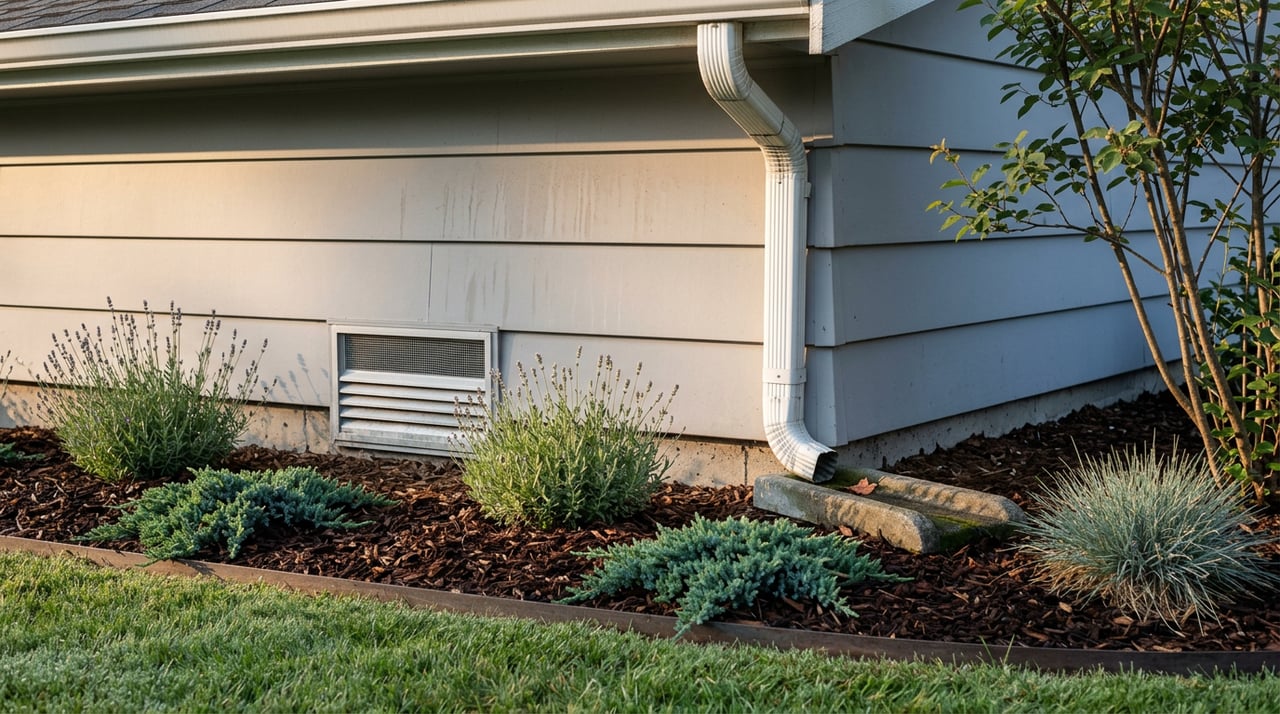
The irrigation season in the Middleton system typically runs from mid-April through October. During those months, canal-fed corridors see the local water table rise by 3 to 8 feet compared to winter levels. That is not a hypothetical. It is the documented reason certain pockets of Middleton show up again and again in foundation and drainage work: crawl spaces that stay dry all winter and take on water every spring once the canals fill.
A neighboring system offers a live example of how directly these companies respond to water-year conditions. In May 2026, the Farmers Union Ditch Company, which serves canal users elsewhere in the valley, notified shareholders it was cutting canal flows to roughly 80 percent of normal delivery because of an unusually dry spring, with the 2026 water season having started the week of April 13. Local canal companies are not passive utilities. They adjust deliveries year to year, and those adjustments change how much water sits under a given property at any given point in the season.
The corridors react differently depending on what is under them:
| Area | What's under it | What it means for a buyer |
|---|---|---|
| West Middleton, near the river | Sandier alluvial soil close to the Boise River channel | Fastest and highest seasonal water table rise; crawl space and sump questions come up most often here |
| Purple Sage area (including subdivisions like Purple Sage Estates) | Newer construction on graded, formerly irrigated farmland | Compacted fill can settle over 5 to 10 years even where the water table is manageable |
| Ustick Road corridor | Recently converted agricultural land | Old field drainage patterns often remain buried and can redirect water toward a new foundation |
| Downtown and Old Middleton | Original in-town lots with older homes | Drainage predates current grading codes, so older lots sometimes need retrofits a newer subdivision wouldn't |
| Emmett Road Area | Mix of septic systems and canal laterals | Saturated drain fields are a real risk where septic and irrigation water overlap |
None of these are reasons to avoid Middleton. They are reasons to ask which system a specific address sits on before treating two similarly priced homes as interchangeable.
A canal share is treated as appurtenant to the land under Idaho law, meaning it is generally understood to run with the property. In practice, "generally understood" is not the same as "automatically transferred." The share, the number of shares, and which company holds them need to be written into the purchase agreement, not assumed from a verbal comment during a showing.
Before writing an offer on a Middleton property, a buyer's agent should confirm:
That last point matters because delinquent irrigation assessments do not simply disappear at closing. Idaho code allows unpaid assessments to become a lien against the land, and canal companies elsewhere in the valley have formal collection processes for accounts that stay delinquent long enough. A title search should confirm the account is current before closing, not after, because a buyer who assumes the water question is settled can otherwise inherit a debt that has nothing to do with anything they did.
The water right is not a footnote to the sale. It is one of the few obligations that survives the closing table exactly as it existed the day before.
Here is where the market data adds a second layer to the same story. As of August 2026, Middleton homes were listed at a median price of $539,000, down 8 percent from a year earlier. That is the number most buyers see first on a portal search. But the most recent sold-price data available, covering closings through November 2025, put the median sale price at $471,000, down 12.7 percent year over year, with homes taking an average of 74 days to go pending compared to 109 days the year before.
Read together, those two numbers say something a single median never could. Sellers are still anchoring list prices to an older, hotter market, while the homes that actually close are trading meaningfully below that ask. That gap is not a reason to lowball every listing. It is a signal that Middleton sellers, more than in a tighter market, have room to negotiate on terms beyond price alone, including who pays for a water rights review, who orders a crawl space inspection in a known corridor like West Middleton, and how quickly repairs identified during inspection get resolved before closing.
In a market with this much room to negotiate, the buyers who ask about canal shares and seasonal groundwater are the ones positioned to use that leverage on the issue that will actually cost them money five years from now, not just the sale price on day one.
Does every Middleton property carry a canal share? No. Some in-town lots on municipal water and sewer do not carry an irrigation obligation at all. The share applies mainly to properties historically served by ditch or canal delivery, which covers most of the acreage and newer subdivisions outside the oldest core of town.
Can a buyer check this before making an offer? Yes. The irrigation company serving a specific address can confirm the number of shares attached to a parcel and the current assessment rate before an offer is written, rather than after.
Does a high water table mean a home has a problem? Not automatically. Plenty of homes in canal-fed corridors have appropriate grading, sump systems, or encapsulation already in place. The point is knowing which corridor a property sits in before assuming a newer build has no exposure.
Buying in Middleton means buying into a working irrigation system that has served this part of the valley for generations. That is part of what makes the town's acreage and rural feel possible in the first place. It is also exactly why the real cost of a home here is not fully captured by its price per square foot. If you are comparing properties across Middleton's corridors and want a clearer read on what sits under a specific address, the team at Boise Idaho Real Estate Agency can walk through the water and soil history of a property before you write an offer. Schedule your free consultation to start the conversation.
Stay up to date on the latest real estate trends.

We pride ourselves in providing personalized solutions that bring our clients closer to their dream properties and enhance their long-term wealth.