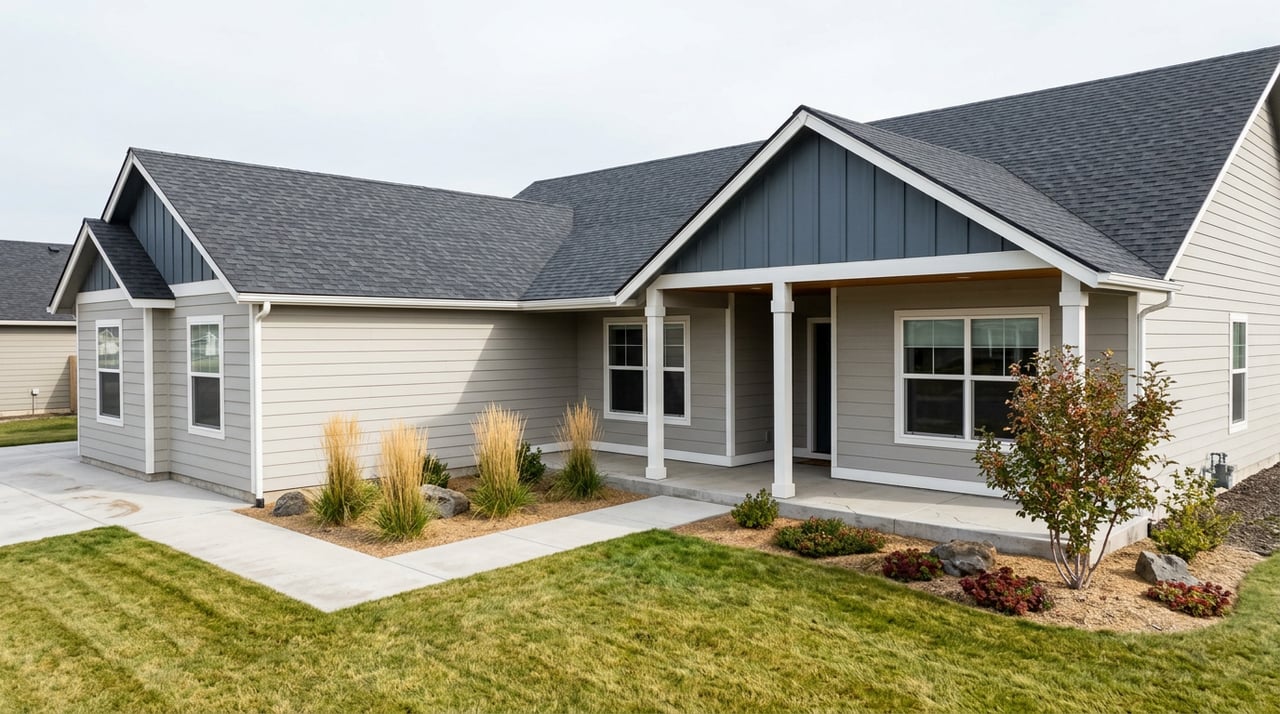
What's Really Driving Up the Price of a New Home in Star, Idaho
September 24, 2026
September 24, 2026
"Development impact fees are not a tax, they are a one-time fee," Star's municipal adviser Christine Stoll told the city council on April 7, explaining why the city was about to raise the cost of pulling a residential building permit by thousands of dollars. The council agreed with her, unanimously, after a hearing that ran more than three hours.
If you've been watching new-construction prices in Star this year and wondering why the math feels different from a year ago, this is where to look. Not at the builder's price list. At the paperwork that gets stapled to it before the first foundation is poured.
Star's parks impact fee had sat at $2,050 per new home for years. The city's yearlong study, built on Census data, regional growth projections and building-permit history, concluded that number no longer covered what a growing city actually needs. The council adopted a three-year phase-in instead of an immediate jump: 80 percent of the new rate in year one, which works out to $4,695.76 per home, 90 percent in year two at $5,282.73, and the full $5,869.70 by year three.
Alongside the parks increase, the council created a police impact fee for the first time: $680.88 per residential unit, with a proposed police training facility stripped out of the calculation after builders objected to including it. Star's existing fire district fee of $809 per unit was left unchanged.
None of that touches the county-level fee that also changed this year. The Ada County Highway District's Ordinance 254 took effect March 1, 2026, raising the road impact fee assessed on a new single-family home countywide to $5,803, up from an assessment ACHD had been charging as low as roughly $3,493 before the update.
Stack all of it together and here's what a new-construction permit in Star carries in government impact fees alone, at three points in time:
| Fee | Before the update | Now (2026, year one) | By 2028 (year three) |
|---|---|---|---|
| Star Parks | $2,050 | $4,695.76 | $5,869.70 |
| Star Police | $0 | $680.88 | $680.88 |
| Star Fire District | $809 | $809 | $809 |
| ACHD Road (countywide) | roughly $3,493 | $5,803 | $5,803 |
| Total | roughly $6,352 | roughly $11,989 | roughly $13,162 |
That's close to doubling in about twelve months, with another step increase already scheduled for 2027 and the final step landing in 2028. This is baked into what a builder has to recover in price before margin, land, materials or labor even enter the conversation.
Here's the part that surprised even people who follow Ada County growth policy closely. Through most of 2025, the conversation around ACHD's fee update centered on a proposed split: one impact-fee rate for an "East" service area including Boise, and a steeper rate for a "West" service area that would have included Star, Meridian and Eagle. Early estimates for that West rate ran as high as roughly $8,900 per home in some draft materials.
That split never happened. When ACHD's commissioners voted 4 to 1 to adopt Ordinance 254, they kept the single, countywide service area model. Every new single-family home in Ada County, whether it's in downtown Boise or a subdivision off Star Road, pays the same $5,803 road fee. The debate over whether growing western suburbs should shoulder a bigger road bill than the rest of the county was resolved by not adopting the split at all.
That doesn't mean the increase was small. ACHD's board raised the countywide rate substantially, and builders pushed back hard on the number itself, not just the geography. Brighton's Jonathon Wardle told commissioners the proposed increase was inconsistent with the rate of impact fee collections the district had used since 2019. Star's own building industry critics made a similar argument about the city's parks and police study.
"This study does not meet the standard of fair and equitable impact fees," Adam Capel of Tridio Homes told the council on behalf of the Building Contractors Association of Southwest Idaho. An independent reviewer hired by the same group, Carter Frolic of Launch Development Finance Advisors, told the council the fees were overstated and not compliant with Idaho code.
City staff disagreed, and the ordinance passed anyway. The point for a buyer isn't who was right in that argument. It's that the fee stack landed where it landed, and it's now part of the cost of every new permit pulled in Star.
Star has been one of the fastest-growing cities in Idaho for several years running, and the city's own growth study projects a population near 45,816 by 2035 under a medium growth scenario. Mayor Trevor Chadwick has been blunt about the pressure that puts on parks, police and infrastructure that were sized for a much smaller town.
Part of the backdrop here is a 2021 state law that capped how much property tax revenue cities can collect from growth, which BCA lobbyist Ken Burgess argued was pushing Star to lean on impact fees instead. Chadwick's response, delivered publicly at the same hearing, was that impact fees are one of the few tools state law leaves cities to make new development cover its own costs rather than asking existing residents to subsidize it through their own tax bills. That tension between "growth pays for growth" and "don't make new homes unaffordable" is the actual argument playing out in Star's city hall right now, and it's not resolved. The council's own advisory committee is required to review these fees annually.
If you're cross-shopping new construction between Star and its neighbors, the sticker price on a floor plan is no longer the whole comparison. The impact fees above are specific to Star and Ada County. A similar home built in a different jurisdiction runs through a different fee schedule entirely, and the honest way to compare two subdivisions is to ask each builder directly what's already folded into the base price versus billed separately at permit.
This is also showing up in how builders are competing for buyers. Ada County homes averaged 60 days on market in February 2026, up 15.4 percent from a year earlier, and inventory sat at about two months of supply. In that kind of market, some builders in Star are leaning on rate buydowns and closing-cost credits rather than dropping list prices outright, which is one reason two homes with the same sticker price can end up costing very different amounts once you run the actual numbers on financing.
A few questions worth putting to a builder or their sales office before you sign anything:
Do I pay these impact fees directly as the buyer? Builders pay impact fees when they pull the permit, but the cost is generally built into what they charge for the finished home. You're not writing a separate check to the city, though you are the one ultimately covering it through the purchase price.
Will these fees affect the price of resale homes in Star too? Not directly. Impact fees are assessed at the time of new construction, so a resale home already carries whatever fee structure applied when it was originally built. The current increases apply to new permits going forward.
Are these fees final, or could they change again? Star's ordinance requires an annual review of the fees and a full update to the underlying study at least every five years. The parks fee itself is already scheduled to step up twice more before it reaches its full rate in 2028.
If you're weighing a new build in Star against something already on the ground in Eagle, Meridian or elsewhere in the Treasure Valley, the fee stack above is exactly the kind of detail that changes what a fair offer looks like. The team at Boise Idaho Real Estate Agency tracks these local fee schedules and builder incentive structures as part of every new-construction conversation we have with buyers. Schedule your free consultation and we'll walk through the real math on any home you're considering.
Stay up to date on the latest real estate trends.

We pride ourselves in providing personalized solutions that bring our clients closer to their dream properties and enhance their long-term wealth.